
Notes on Care (with David Spivak) - A Repost
A promissory fragment

This week I’m reposting some notes I wrote with my friend and colleague David Spivak on care. Since Without Why gained a good number of new subscribers recently, I wanted to repost this piece (which I originally posted in July 2025), since it gives a substantive picture of the phenomenon of “care” which is one of the main recurrent themes of these pages.
(One of my main goals of the next few months is to finish the main essay for which David and I prepared these notes.)
At the end of this post, I give a kind of “table of contents” that gathers together many of the complementary posts about care that I have written over the last several months.
These rough notes are co-authored with David Spivak, my colleague at Topos Institute. They are part of a larger project David and I have of criticizing the widely taken-for-granted notion of “values,” and exploring the notion of care as an important and neglected topic in today’s conversations about technology.
My recent talk, “Who Cares About Values?” is also part of this project. David and I will be posting a longer and refined version of these thoughts, embedding them into our critique of values, later this month. If you appreciate this post, please share it!
Notes on Care: A Fragment
Values try, and fail, to capture what we care about. But what is care?
First and most fundamentally, care is a way of being in the world, to use Heidegger’s phrase. Caring is not something we have, like values we can list. It's something we do and something we are. Caring is our basic orientation, the way we find ourselves already involved with things that matter to us. Before we ever step back to reflect on our values, we're already caring, already engaged, already tending to what calls to us.
Care has a peculiar circular structure that reveals something important about it. We care about what matters to us, and what matters to us is what we care about. This isn't a logical flaw but a feature of the phenomenon itself. We don't start from a neutral position and then decide what to care about. Things find ourselves finding things already important. We find ourselves moved by certain people, projects, and possibilities. By being so moved, we can figure out what we care about. The gardener doesn't first calculate the utility of gardening and then care. The parent doesn't evaluate their child against some metric and then decide to love. The musician doesn't assess the value proposition of making music and then commit to the band. In each case, something already matters in a way that precedes any evaluation.
See B’s paper Care, Death, and Time in Heidegger and Frankfurt for further development of these issues
Of course, we can’t deny that some gardeners, musicians, and lovers involve themselves in such calculations. In fact, one characteristic of our technological age is that we feel compelled to always be optimizing our options and maximizing utility. But, in fact, we cannot actually tend to what matters to us while trying to optimize and control it, as is revealed by phenomena like transactional friendships, controlling relationships, factory farming, and industrial agriculture.
The recent Hollywood movie Materialists thematizes the clash between care and optimization with respect to romantic love. It attempts to skewer our modern compulsion to relate to love as though it were a math problem to solve, and a matter of checking off and balancing the maximum number preference boxes. In the end, however, the movie itself still fundamentally buys into the whole narrow, utilitarian picture of love it rightly sets out to criticize. This reference to it is not a recommendation to watch it.
Next, care is connected to our vulnerability, interdependence, and mortality. We're born as vulnerable babies requiring extensive care, and we end our lives as vulnerable elders. Our vulnerable and profoundly interdependent way of being, drawing us together to sharing resources and relationships, ripples through how we live our lives. It carries over into how we come to articulate what in life has importance, vitality, or triviality. Our capacity to care is bound up with this finite, vulnerable, interdependent, embodied existence. (Note: here we are indebted to conversations B had with Fernando Flores about the foundations of care in human life.)
Care manifests as tending and attending.
Caring is tending and attending to what matters. It's an ongoing activity of cultivation that brings things out at their best. When we care for something, we're not just maintaining it in its current state. We're involved in its becoming, helping it realize what it might be. This tending is responsive and contextual. The gardener notices changes in the plants and adjusts their care accordingly. The parent attunes to each child's unique temperament. The musician listens for how the band's sound is evolving and responds.
See David’s talk “All My Relations”: Contributing to a Fabric of Belonging for further development of these issues.
Importantly, care resists complete formalization and definition. You can't fully specify in advance what caring for something will require. It demands ongoing responsiveness to the particular situation. This is why the language of values, with its promise of precise specification, fundamentally misunderstands care. Values tempt us to think that we can articulate what matters once and for all, then optimize for those articulations. But care exists precisely in the responsive adjustments, the noticing, being ongoingly connected with what we tend.
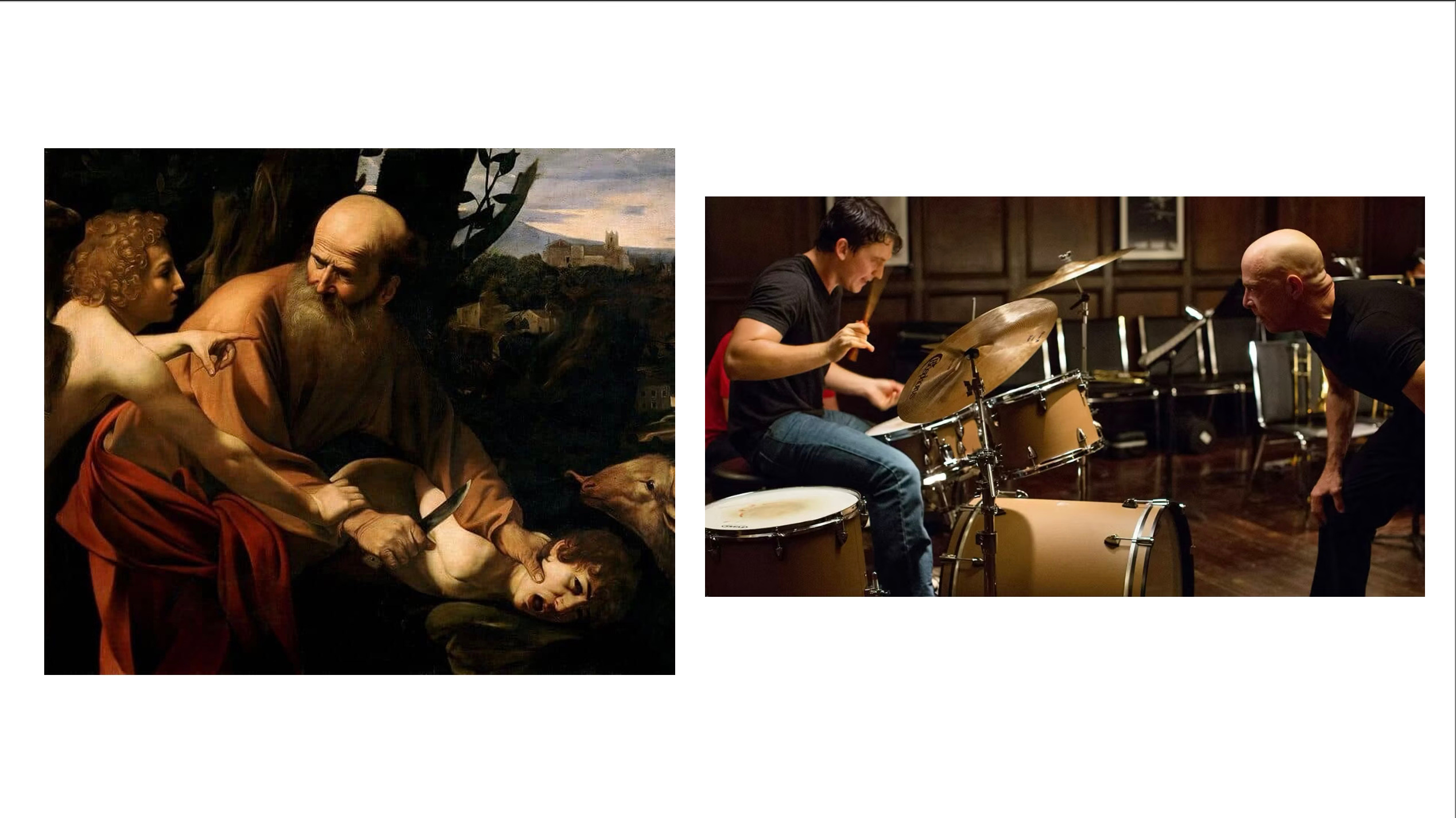
Care shapes our will in ways that can lead us beyond or even against reason and morality. Harry Frankfurt pointed to Martin Luther's famous declaration, "Here I stand, I can do no other," as an example of how deep care can compel action that seems to transcend rational calculation. Kierkegaard explored this through Abraham's willingness to sacrifice Isaac, revealing how an ultimate, unconditional commitment can demand what society would condemn. More mundanely we see it in the punk drummer who sacrifices everything sensible to perfect their craft. Care can make us do things that look crazy to others because what matters to us matters in a way that can exceed rational justification.
Caring is embodied in our tacit know-how, not just in our “ideas” or the stories we reflectively tell ourselves and others. We can care about something, it shapes our way of being in the world, often without being reflectively aware about it as a fact. That’s because our caring shows up in how we act and respond to the world, often before we ever stop to think about it. We usually don’t figure out what matters to us by thinking it through; rather, we’re already caught up in what matters through the way we live and feel our way through situations.
See B’s paper, Self-awareness and Self-understanding for more on these issues.
Our cares get provisionally articulated in language, but the articulation is never the whole story. We need language to coordinate with others, to understand and to explain ourselves, to work out what we're up to. But these articulations are always provisional, always approximations of something deeper. Think here of the “tip of the tongue” phenomenon, when we have a sense for what we need to say, but lack the fitting words and expressions; hence the dissatisfaction we can immediately experience as we attempt to put into words “what’s the matter” with us: “No, that’s not it….”
Sometimes, the very attempt to say “what’s the matter” changes our sense of what the matter is. I may be initially drawn to articulate my emotion as anger only to realize I am insecure and jealous. The words we use to describe what we care about lurk at the place where language both reveals and conceals. This is part of why values, which present themselves as fixed articulations, miss something essential about care.
Care is always future-oriented and open-ended. As long as you care about something, there's always more to do, always new ways it might flourish or fail. As long as we care, our caring is “always outstanding.” A musician who cares about their craft always has more songs to write, more shows to play, new ways to develop. A parent's care extends indefinitely into the future as their child grows and changes. This open indefiniteness is not a bug but a feature. Care projects us into the future while keeping that future open to what might emerge through our tending.
Our caring is embedded in the historical moment we inhabit. No one today can be gripped by the sale of indulgences that drove Martin Luther to nail his theses to the church door in Wittenberg. That particular configuration of religious authority, monetary exchange, and spiritual anxiety belongs to a world that has passed. But we face our own historically specific calls to care. For perhaps the first time in human history, younger generations are beginning to feel that the Earth itself has a moral claim on us. We've recognized that human activity threatens the very conditions that make life possible, and this recognition creates new forms of care and calls forth new emotional experiences.
Take "flight shame,” a feeling that emerged in Sweden when people like Greta Thunberg's mother, an opera singer, began refusing to fly because of aviation's impact on the climate. She refused to fly because flying around the world just because we want to and just because we can, earth be damned, started to feel bad. This feeling told her something was going wrong with respect to what she cares about: her daughter’s future wellbeing, and ultimately the wellbeing of the earth itself. The feeling, emergent from her care, needed to be articulated in language and given its new name in order to make sense of what it was. Flight shame is a genuinely new emotion to which some people are susceptible; it is a feeling that would have been incomprehensible to previous generations. It reveals how our historical situation doesn't just present us with new things to care about, but actually calls forth new ways of caring, new articulations of what it feels like when the world makes a claim on us. We discover or reveal new dimensions of what matters that only become possible, and sayable, in the world we now inhabit.
See B’s paper, Existential Selfhood in Merleau-Ponty’s Phenomenology of Perception for further exploration of these issues.
Care is morally neutral in itself. People can care deeply about destructive projects. This is why the questions of what deserves our care, and how we cultivate our capacities to care well, become so important. Care provides the energy and orientation for our actions, but it doesn't by itself determine whether those actions are good.
Finally, care can be lost; it can be usurped. This might be its most important and overlooked feature in our current moment. Unlike skills that can be relearned or values that can be re-adopted, care that has withered away doesn't easily return. When we stop tending to something, we often stop caring about it in the same way. The executive who delegates all their writing to AI doesn't just lose writing skills but loses touch with the thinking that happens through writing. The parent who always pacifies with screens doesn't just lose parenting techniques but dimensions of what it means to be present with a child.
This vulnerability of care itself is what makes our current moment so precarious. As we create systems that promise to care for us, to optimize our values more efficiently than we can ourselves, we risk losing not just specific capacities but our fundamental orientation as beings for whom things matter. Understanding care in its full dimensions becomes essential for navigating a world more and more populated by AI systems that can process our values but do not care. Can they be trained to care, and to be attuned to the dynamics of our caring? This is among the most important questions of our times.
To see how I have been making use of the phenomenon of care to diagnose and address some of the vexing issues about being human in the age of AI, see, especially, my series, “Technology, Nihilism, and Giving a Damn”:
Part I: The Limits of Autonomy
Part II: The Limits of Optimization
Part III: The Limits of Care (with a reprise here)
Part IV, “Punk as a Response to Nihilism”
My talk, “Why Not Brain Rot: AI and Contemporary Nihilism,” gathers these considerations in a condensed and lively way
See also my talk, “Why Care Matters for AI: New Conceptual Foundations for AI Alignment,” for how these issues bear upon the conversation for AI alignment.
For a roundup of recent relevant work on these issues, see “Intelligence, Consciousness, and Care”
Learn some of the Heideggerian background to my concern with care in the piece “The Manifold Varieties of Mattering: Heidegger on Dasein”
See how my friend and mentor Terry Winograd takes up the issue of care in my post in his work: “What’s Up with AI: Terry Winograd’s Life in AI”