
Without Why - 2025 Retrospective

Welcome to the New Subscribers!
The algorithmic gods have recently begun to smile upon my page more than usual. Without Why has added 116 new subscribers in the past month. Welcome, and thank you for subscribing! This project is approaching its one-year anniversary on December 13. I was hoping to breach 500 subscribers by that time, and now I’m on track to break 600.
I see this page primarily as a place for the philosophical exploration about how to live well in the age of AI, and what it means to be human in it. As I put it in a recent interview (which I will share next week) about how I practice philosophy:
I’m especially concerned with how AI is reshaping our own self-understanding and ways of engaging with the world. My interest is not so much in predicting AI futures, but in understanding (and influencing) how these tools reshape the possibilities of human wellbeing and flourishing.
Even so, I do predict that LLMs will not deliver on the hype that has been heaped upon them, and more attention will need to be given to the human skills needed to put these tools to good use. I wrote about this topic recently in this post: “The Fate of Expertise in the Age of AI.”
The name “Without Why” comes from a poem by the 17th century mystic, Angelus Silesius, who wrote: “The rose is without why; it blooms because it blooms.” (Die Rose ist ohne warum; sie blühet weil sie blühet.) I say more about what this line means to me in the “About” page.
Review of 2025
I have been releasing a steady stream of substantive posts. Rather than adding another to that list today I’m going to take a moment to review the year that is coming to a close. Next week I’ll share a projection of what I have in store for 2026.
I’ve grouped most of this year’s posts into the following loose categories.
Technology, Nihilism, and Giving a Damn - 2025 Capstone Series
The main event of the last few months has been my series on “technology, nihilism, and giving a damn,” which has seen three installments so far. This is a series about the real existential stakes of the emergence of AI, and the prospect of people increasingly “offloading” their own decisions and actions to AI systems. What is at stake, I argue, is more than a threat to our individual autonomy.
Autonomy itself doesn’t matter unless there are meaningful possibilities between which we can choose; unless there are things, people, and projects that matter to us and that draw us into connection and commitment. Thus, the real concern in our technological age is the erosion of our capacities to care: to give a damn about what is happening in our lives and in the world. The path of human flourishing is the path of giving a damn.
Hence the installments in this series so far:
The Limits of Autonomy: Technology, Nihilism, and Giving a Damn, Part I
The Limits of Optimization: Technology, Nihilism, and Giving a Damn, Part II
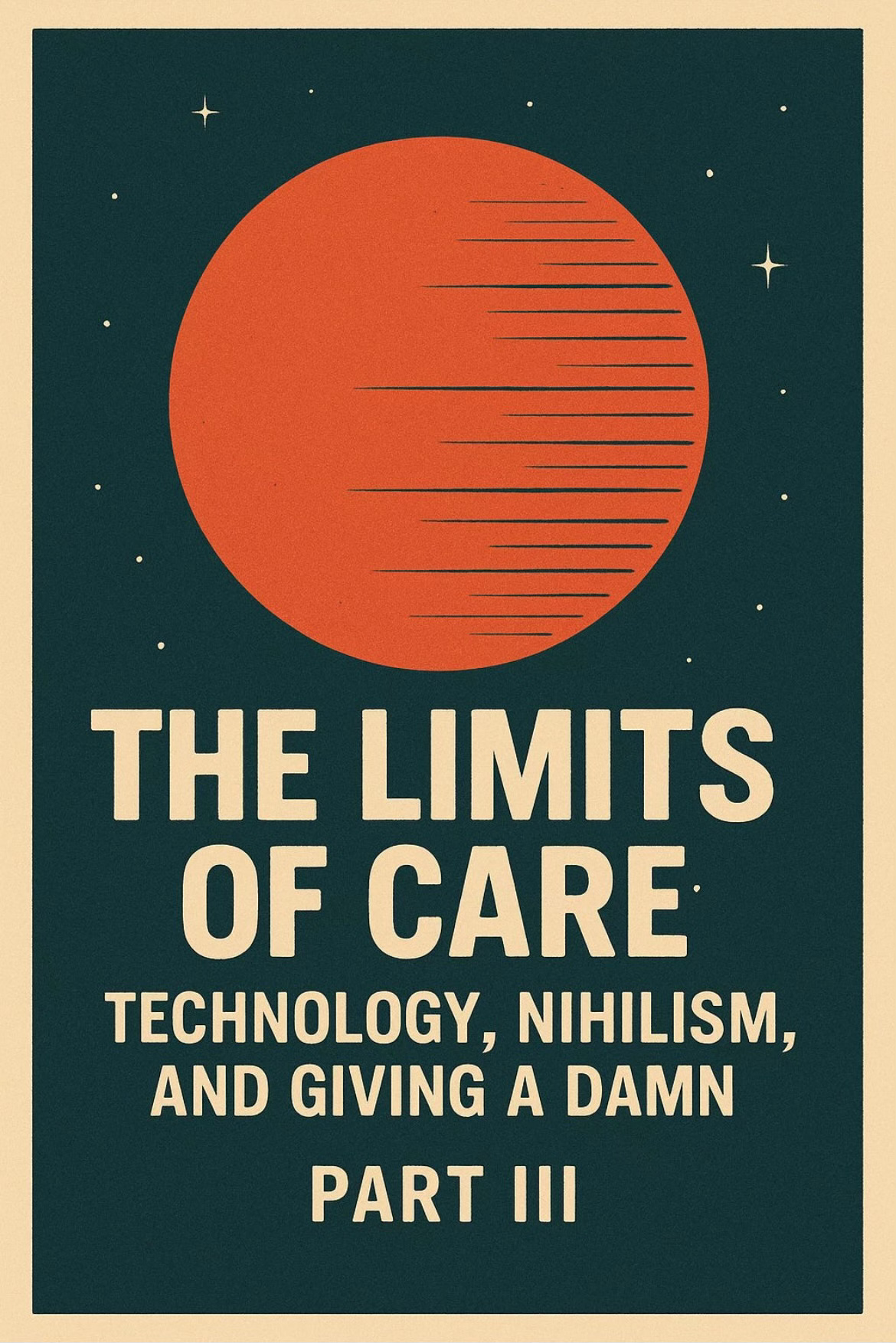
The Limits of Care: Technology, Nihilism, and Giving a Damn, Part III
Part III includes a review of the first parts and so is the most comprehensive of the series. I think of that piece as the capstone of the Without Why endeavor in 2025. I have at least one more piece up my sleeve in this series.
The Human Skills Needed for Living Well with AI
Another informal series of posts this year has explored the question of the human skills needed for living and flourishing in the emerging world of AI. Some of these posts include:
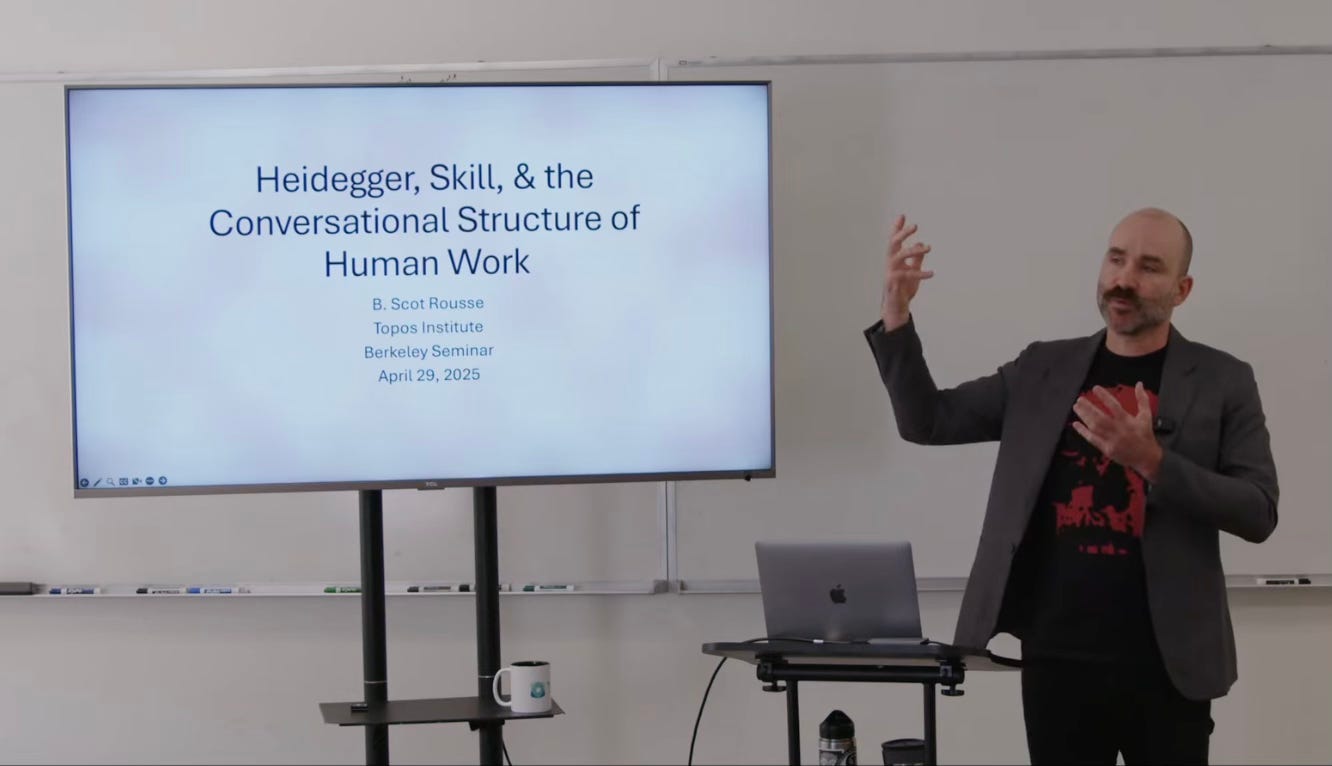
Heidegger, Skill, and the Conversational Structure of Human Work
The Fate of Expertise in the Age of AI (with Massimo Scapini)
What We Owe the First Generation Growing Up with Generative AI
Designing Ourselves: AI, Care, and the Responsibility of Invention
Strange Familiarity, Part Two (An Overview of the Dreyfus Model of Skill Acquisition)
Resisting the Hype Machine: Humans are not LLMs
This next cluster of posts pushes back against the growing temptation to interpret ourselves as versions of the machines we’re building. As I put it in “Frictionless Spinning in the Void,” the dazzling ability of today’s LLMs to simulate an experience of meaningful dialogue brings a dangerous temptation:
The temptation to think of human intelligence and language as reducible to disembodied information processing, the temptation to forget the primacy of our embodied presence in the world, the temptation to imagine that thought and language float free of the moods, shared practices, and commitments that constitute our world and make us who we are.
AI, Phenomenology, and the Uncanny: A Conversation with Tao Ruspoli
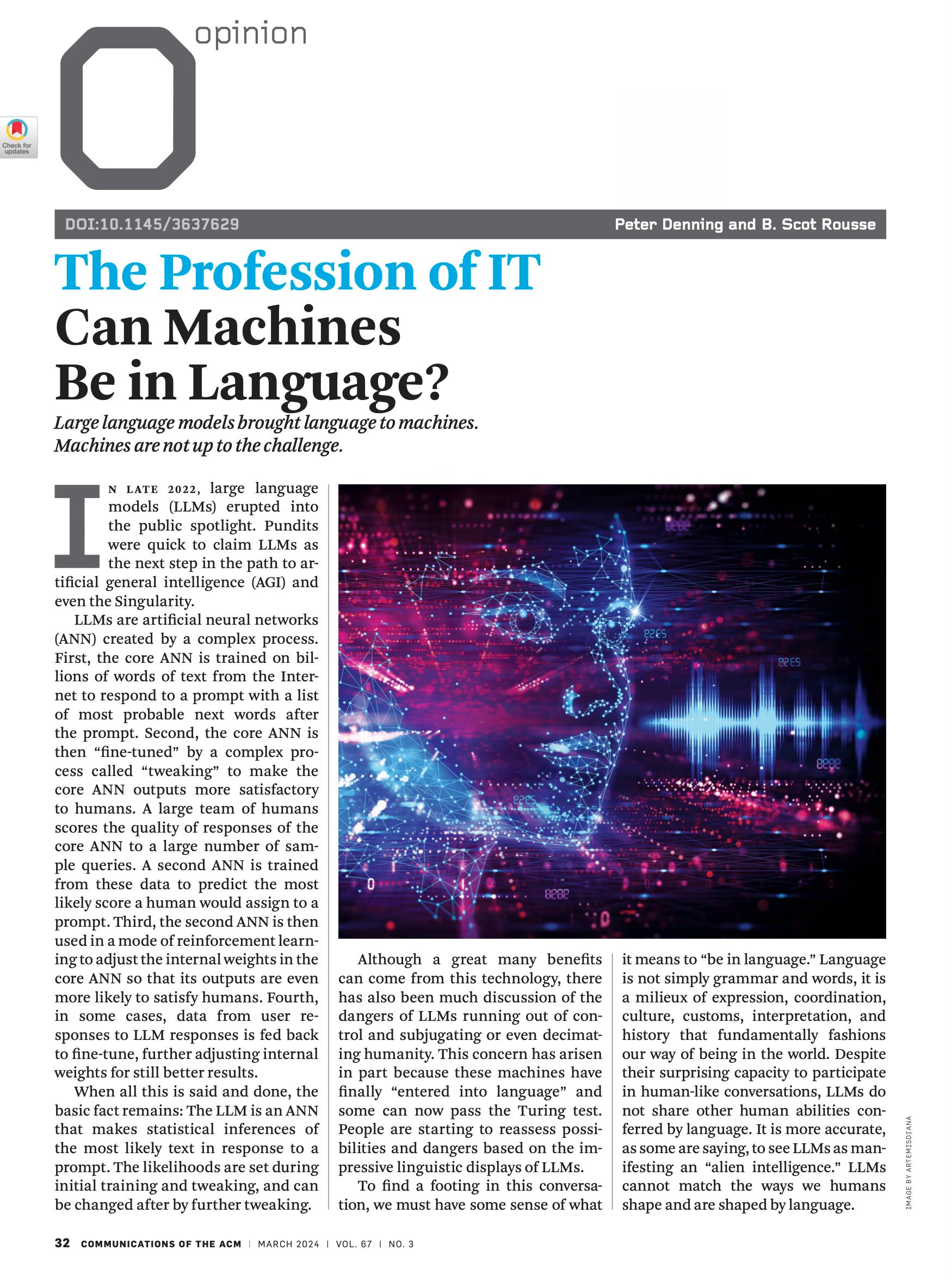
Can Machines Be in Language? (with Peter Denning; Communications of the ACM)
The Heidegger Series
One discontinuous thread in Without Why is my series on Heidegger’s Being and Time. I provide a section by section summary and commentary, with the aim of connecting Heidegger’s thinking to the concerns of our times.
The motivation for this is that the conversations around AI need richer philosophical resources to draw from beyond the utilitarianism or libertarianism that are often used to frame today’s debates.
Moreover, Heidegger’s thinking is at the foundation of an important, but currently under appreciated, tradition of philosophical reflection on the nature and limits of AI, and the effects of AI on what it means to be human.
Adopting from what I said in a forthcoming interview:
My work in the philosophy of AI aims at revitalizing and sustaining a lineage of thought running from Martin Heidegger and Maurice Merleau-Ponty to the Dreyfus brothers (Hubert and Stuart), John Haugeland, Patricia Benner, Terry Winograd, and Fernando Flores.
This tradition treats human intelligence and language as inseparable from embodied skills, moods, shared commitments, and care. These are the capacities that make a world hang together for us, and tending to them is essential if we are to avoid narrowing ourselves into machine-like forms of life.
The Dreyfus brothers, and those they influenced, were writing in the era of symbolic AI, or “Good Old Fashioned AI” (GOFAI, a phrase coined by John Haugeland), when “intelligence” meant symbol manipulation, rule-following, logical formalisms, and puzzle-solving.
But their critique of this picture of intelligence remains highly relevant today, even though symbolic AI has fallen out of vogue, having been displaced by the neural network approach behind today’s LLMs. One part of my mission here is to reveal and explain the continued relevance of this tradition to today’s world of AI.
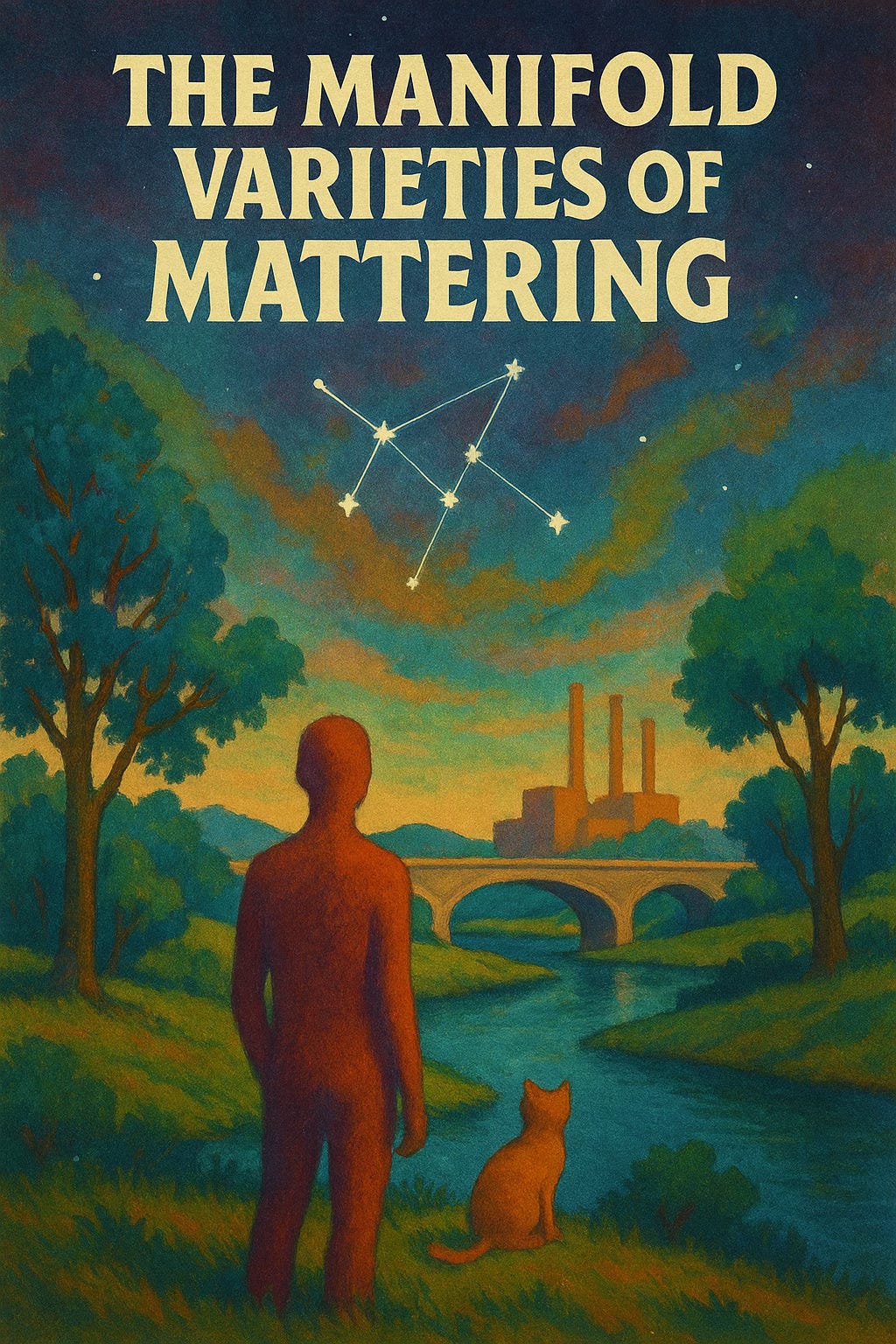
The Heidegger Series so far includes:
The Manifold Varieties of Mattering: Heidegger on Dasein (Being and Time, §4)
“Who’s Asking?” - Spelling out the Question of Being (Being and Time, §2, continued)
What is Ontology and Why Does it Matter? Beginning with Heidegger’s Being and Time.
I have heretofore only made it through the first four sections of Being and Time. But I have much more up my sleeve for next year, especially because I taught the course on Heidegger’s Being and Time at UC Berkeley over the summer, and have lots of materials and videos to share here stemming from that. I plan to edit the videos to include further relevant audio-visual components.
So far I have uploaded one, brief, proof-of-concept video to YouTube, showing what I have in mind for this series:
The Philosophical Significance of Punk
A final occasional thread that I weave into these pages is a philosophical reflection on the significance of punk as an attitude and cultural phenomenon. I’m a lifelong punk musician (see my discography here), currently drumming in three bands, and I’m a trained philosopher, so I can’t quite help myself here.
In my interpretation, punk is a response to and manifestation of the nihilism permeating our technological age. So far there have been two main posts where I start to share some of my philosophical reflections about the nature of punk and its connection both to nihilism and the traditional philosophical concern with living a good life:
Here is me playing a heavy drum flourish at the of a song for my new punk-metal band VEXXYL (make sure your volume is low):
Next time I’ll be back with a look ahead at 2026!
Those of you who were among my first wave of annual paid subscribers (thank you!) will be receiving an email from me next week about renewing your subscription.