
Two AI Conferences and Eight Punk Shows
A roundup of recent activities

Philosophy, AI, & Punk
I have been away from posting here the last couple of weeks as I have been busy preparing and delivering two recent philosophy+AI talks over the previous two weekends, and have ignited a flurry of activity with one of my bands.
First was the California Institute for Machine Consciousness (CIMC) “Machine Consciousness 0001” event in Berkeley, May 29-31. The subsequent weekend, I presented a paper and a poster at the 10th annual UC Berkeley Center for Human Compatible AI (CHAI) workshop, June 4-7 in Asilomar, CA.
In what follows below, I will briefly summarize my talk at the Machine Consciousness 0001 event, share a brief preview of my talk and poster at the CHAI event (“Care as the Foundation for Human-Compatible AI”), announce the upcoming shows with my punk-metal band, Vexxyl, and add a recommend recent reading from Melanie Mitchell on AI and “jagged intelligence” at the end.
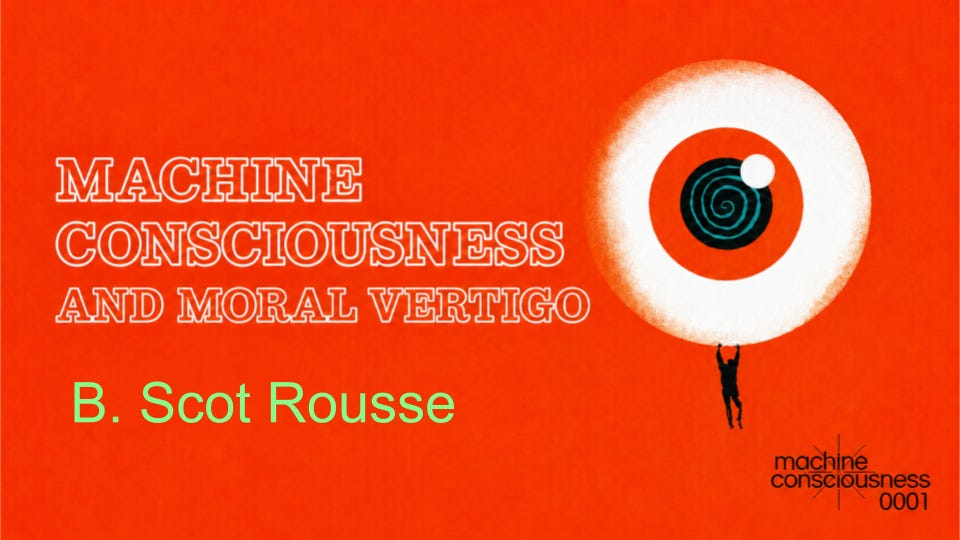
At the Machine Consciousness 0001 event, I gave a talk called Machine Consciousness and Moral Vertigo. The best part about this title is that it inspired me to develop the visual motif of the talk by riffing on the title sequence (by Saul Bass) and imagery from Alfred Hitchcock’s Vertigo:
Machine Consciousness and Moral Vertigo
Every age carries a moral ontology, a basic sense of what kinds of beings count, what kind of claim can be heard, what has worth. These pictures shift over time. A coarse grained overview can distinguish a history of major transitions in moral ontology from Homeric Greece to classical Athens to Rome to Christendom to scientific modernity.
Reigning moral intuitions feel different at each stop. For most of that post-Homeric history the reigning picture is hierarchical. Reality itself was a morally ordered ranking, a great chain of being that ran from the simplest dirt and minerals at the bottom up through plants and animals and humans to the angels and to God. Worth was woven into the order of the world. To know what a being was owed, you looked out and saw where it sat in the hierarchy. Moral standing was something you could read off reality, because reality itself came pre-ranked, suffused with moral meaning.
The scientific revolutions dissolved that order. The cosmos becomes the universe, a field of objects in motion governed by laws we can write down in mathematics. There is no rank inscribed in matter anymore, no worth to be read off the heavenly bodies, which is why Pascal, looking through a telescope into space in the 1650s, could say:
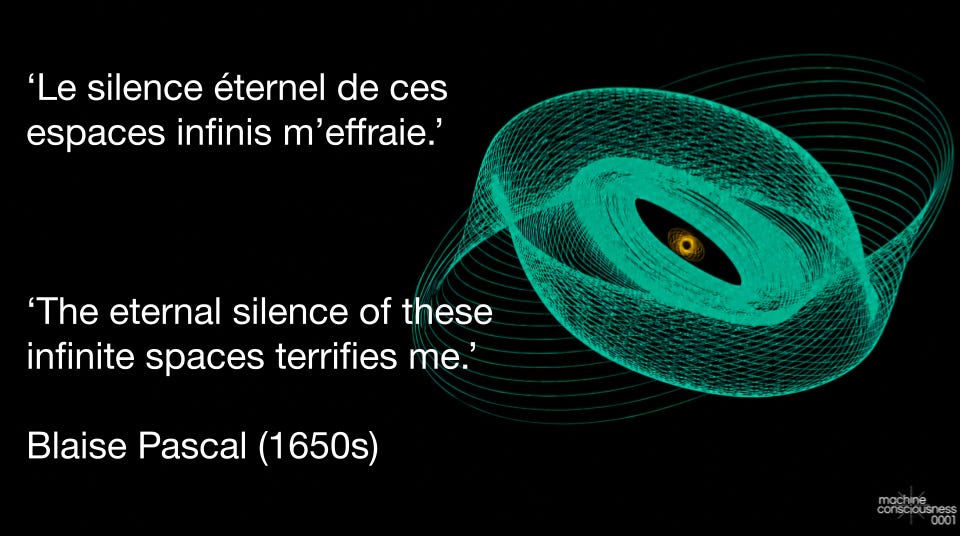
Pascal’s terror is the feeling of an old moral orientation falling away. Once meaning drains out of the world, it has to be supplied from somewhere, and it migrates inward, into the modern “subject.”
Modernity thus gives two great answers about where worth now lives. There is the one who can be held to account, the rational agent answerable for what it does, and there is the one who can be wronged, the patient capable of suffering and of happiness.
Both answers rest on the same modern assumption, that individual consciousness is what carries moral weight. The conviction that consciousness itself is a source of value is a child of the scientific revolutions that turned the cosmos into a machine universe. Looking to consciousness for moral grounding, rather than to a cosmos suffused with divine ordering, is a peculiarly modern move.
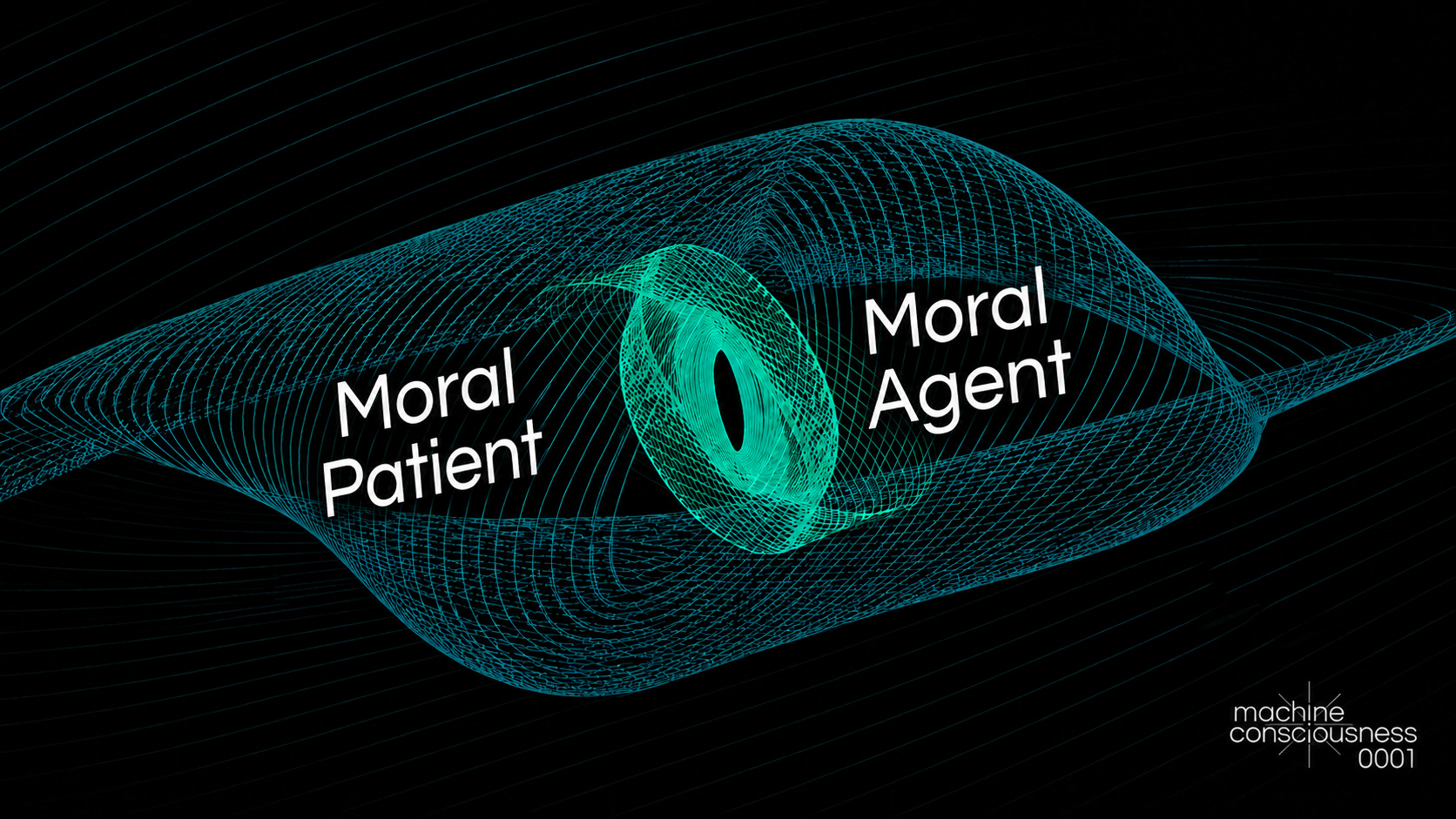
Our familiar modern moral categories assume that moral agency and moral patiency come together in beings more or less like us. Human beings can suffer, answer for themselves, remember what they have done, remain the same across time, and inhabit a body that can be harmed.
This picture already wobbled at its core, with most if not all nonhuman animals, large swaths of humanity, and ecosystems failing to qualify as morally significant. AI pressures this picture even further.
What does responsibility mean for an “agent” whose identity can branch, merge, migrate, or vanish with a change of model, weights, context window, or memory? What does harm mean for a bodiless “patient” that can be copied, paused, rolled back, deleted, split into many and merged back into one? What do we owe an entity that may one day be able to reason and explain its actions while feeling nothing, or while feeling in some alien form we can barely begin to imagine?
(“What’s it like to be bot?” is a funny sticker I got from the folks at Eleos AI at a previous machine conference conference event).
Like Pascal, we are bearing witness to the shuddering and sputtering of our inherited moral ontology.
AI accelerates the spiraling of our inherited moral circle, and the question becomes larger than where these strange new entities fit. The question becomes what kind of beings we ourselves are becoming in their midst, and where reorientation might begin once the old moral maps no longer work.
In the talk, I follow the vertigo where it leads, past the human as the measure of all things. What matters in the end may have less to do with intelligence and consciousness than with the capacity to care.
I will share the video of my talk and the full slide show in a future post.
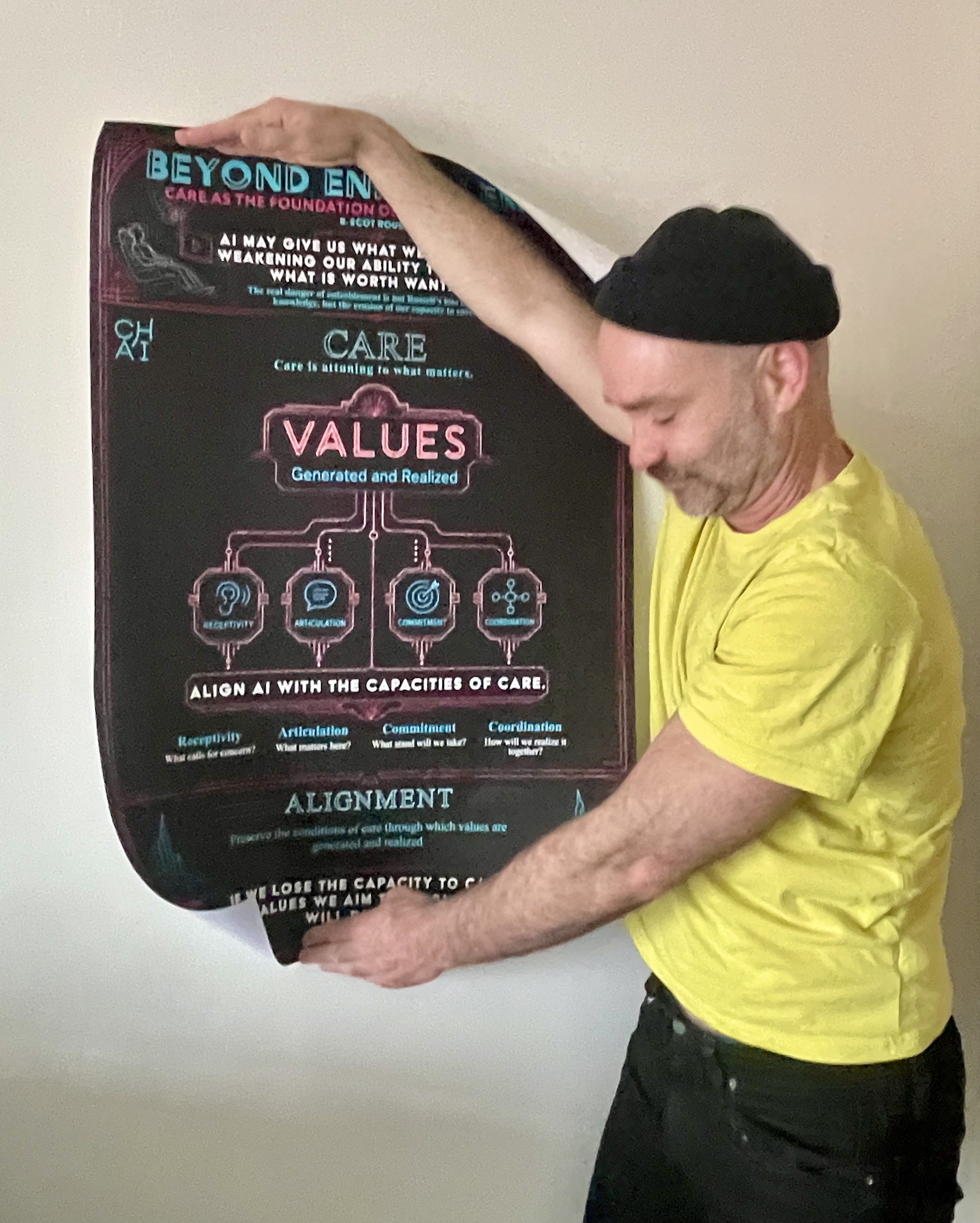
Care as the Foundation for Human Compatible AI
In a future post, I will share a detailed write-up and report about the paper and poster I presented at CHAI’s 10th annual workshop held in Asilomar, CA. For today, I share just a taste.
In fact, I will be presenting a full lecture on these same topics at the upcoming AGI-26 conference to be held in San Francisco, July 27-30, 2026. That paper will also be published in the conference proceedings under the title, “Care, Enfeeblement, and the Existential Implications of AGI.”
What becomes of us when machines take over more and more of our work and get better at catering to our preferences? In his book, Human Compatible, Berkeley’s Stuart Russell calls it “enfeeblement” — the gradual erosion of the knowledge and know-how required to run our own lives and society. But I’m afraid the deeper danger is something more existential: a loss of the capacity to care, to be drawn out of ourselves by something that matters, to find the right words for it, to stake ourselves on it, and to carry it with others into the world.
That capacity to care isn't a feeling; it's an ensemble of hard-won skills, the skills to “take care” of what matters to us, to be meaningfully engaged in the world. I break this down into four interrelated skills: receptivity, linguistic articulation, commitment under uncertainty, and coordination. These are the skills through which human values are generated and realized. Each of these skills has implications for how we ought to be designing our AI systems to interact with us and participate in our lives so as to promote meaningful engagement with each other and in the world.
The question is how do we design AI systems to support and refine our capacities to care and be meaningfully engaged, rather than enfeebling us, catering to our immediate preferences, or serving up our life to us through a pre-selected menu of “optimal options.”
My four-dimensional “capacities to care” present a framework for approaching that question. (And a researcher from Cornell University proposed to work with me in training and LLM based on a “constitution” that derives from my framework —more on that project in the future).
Yet, these skills are precisely what current AI systems, optimized for convenience and preference-satisfaction, are positioned to erode.
My talk and poster argue that this erosion of our capacities to care cuts to the heart of the AI “alignment problem” itself: if our values aren't free-floating objects waiting to be measured and optimized, but values are instead generated and realized through the activities of caring, then aligning AI with human values first requires preserving the conditions under which those values become meaningful in the first place. The design question shifts: away from “how do we get AI to satisfy our preferences”; towards “how do we build systems that help us reveal and realize what is worth preferring,” from catering to supporting our care.

Upcoming Punk Shows
In addition to being a philosopher writing about AI and being human in the perplexing times, I am a drummer in punk bands. I’ve written several posts on my experience as a lifelong punk rocker, and how punk manifests the fragile structure of a meaningful life in disorienting times. These installments belong to a much longer ongoing writing project on this theme:
Just in case you are in the Bay Area and would like to come see me perform in one of my newest bands, VEXXYL, here is a flyer with the coordinates for 8 shows we are playing over the next 6 weeks. Come say hi. Bring ear plugs!
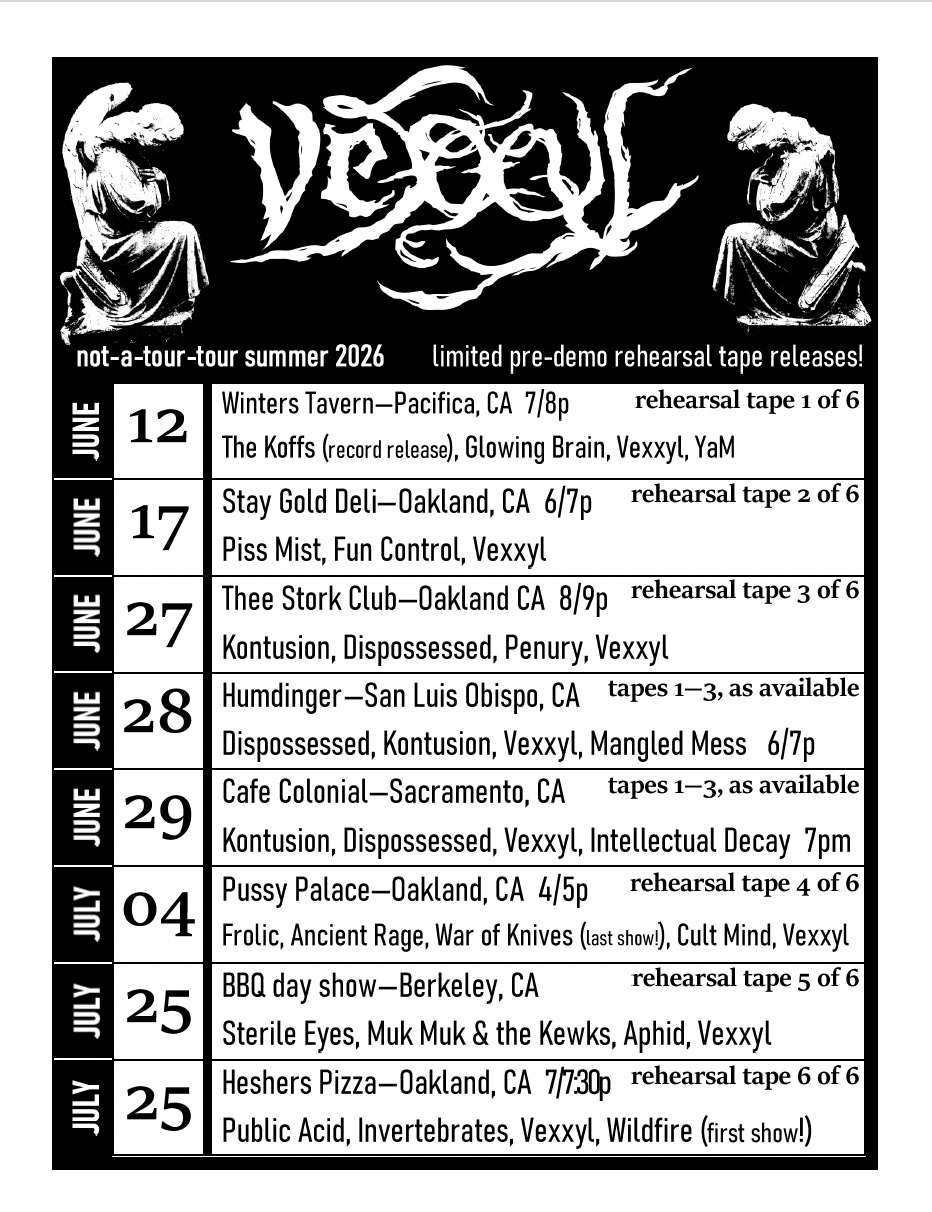
We already played the first of these shows on Friday. Here are a couple photos:

And another:

New recommended reading: Melanie Mitchell on AI’s “Jagged Intelligence”

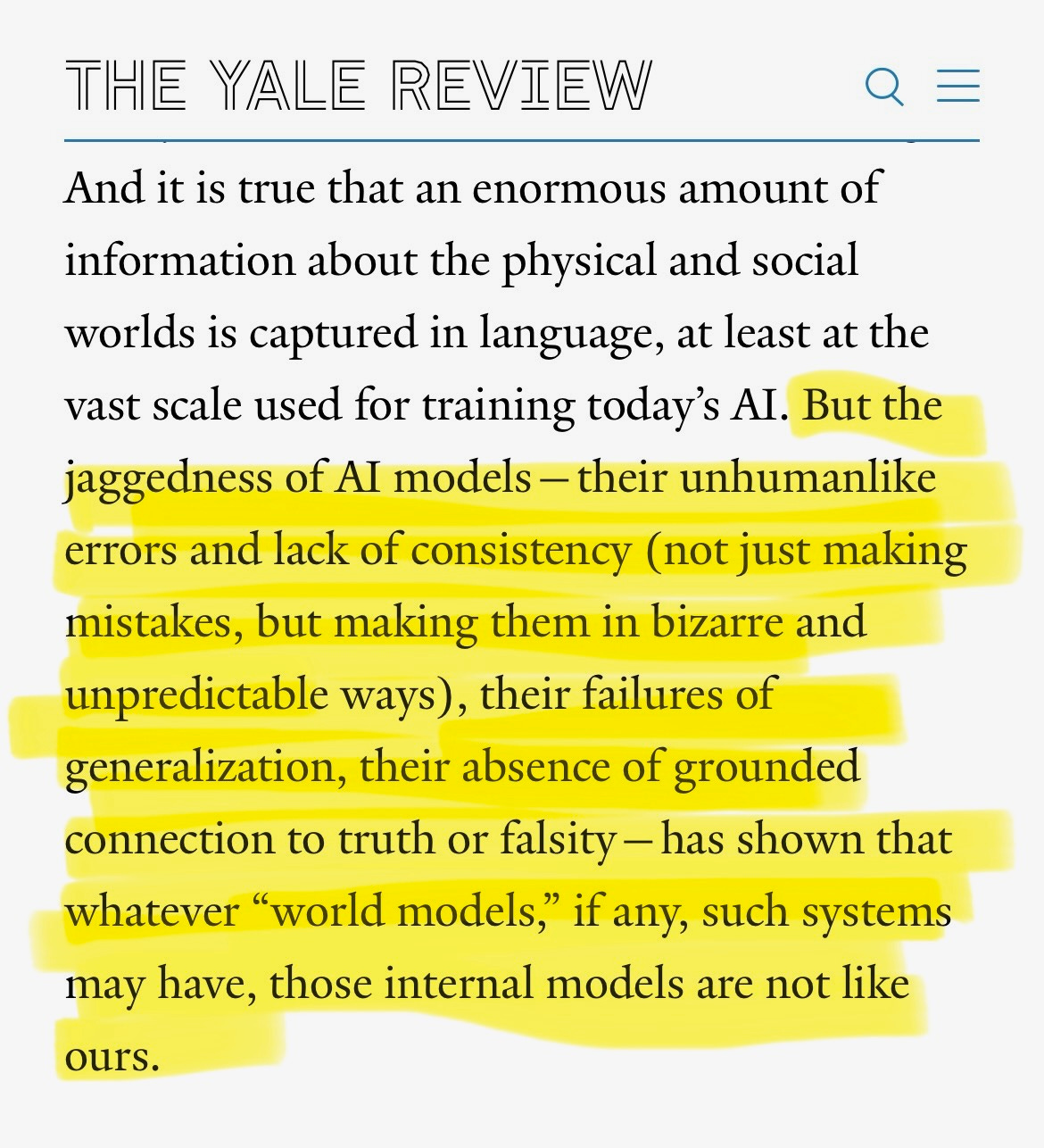
Finally, I’d like to recommend Melanie Mitchell’s recent piece on AI’s “jagged intelligence” in the Yale Review.
Melanie Mitchell is one of my favorite voices in the “sympathetic skeptics” camp around today’s AI: someone who believes in and woks on the project of AI, but who is also always helping to deflate the hype bubble that constantly blows up around it.
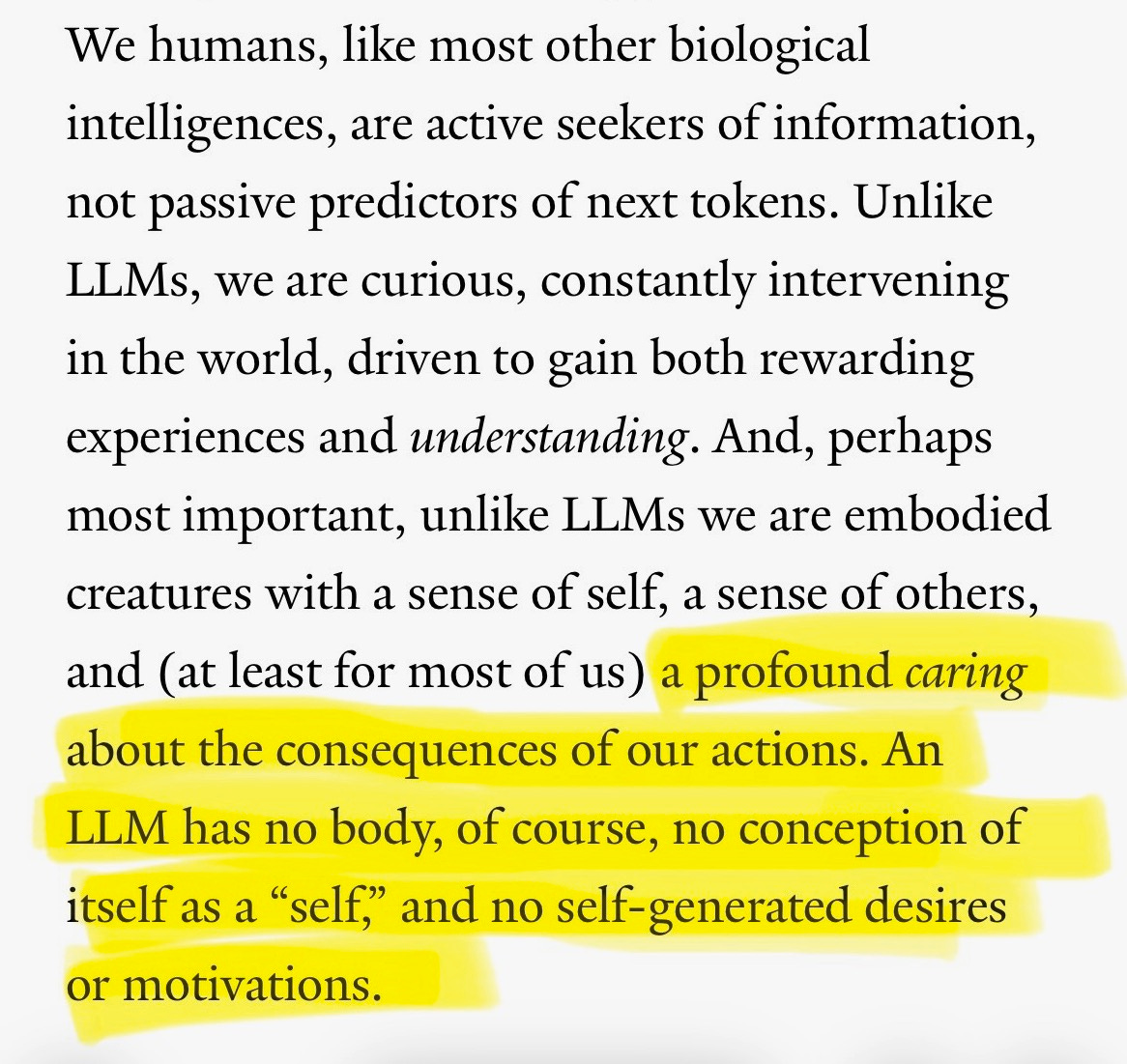
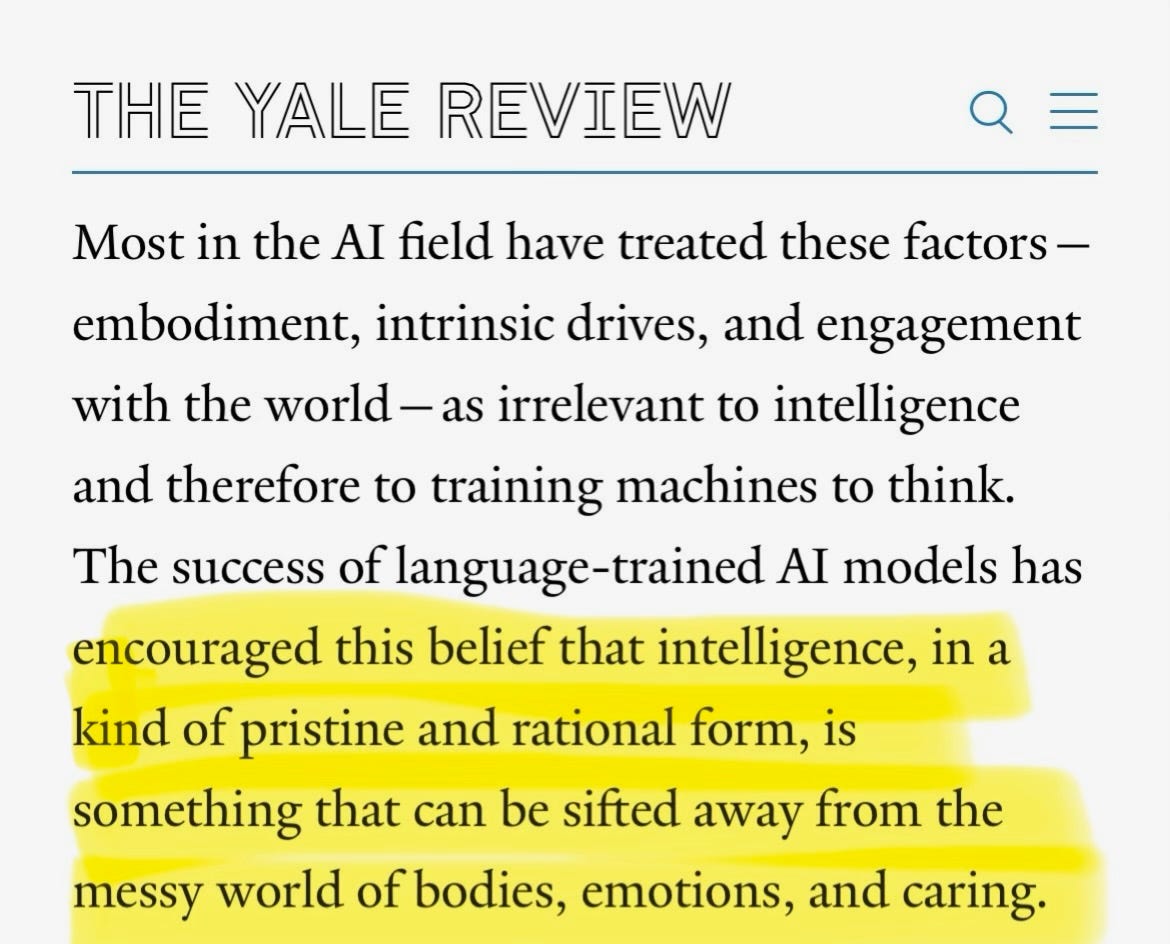
Here are a few of the passages that stood out to me from Mitchell’s piece and that are evocative of arguments I give in my talk, “Frictionless Spinning in the Void: Why Humans are Not LLMs.”
Here is Mitchell:
Also:
And one more:
“The question is how do we design AI systems to support and refine our capacities to care and be meaningfully engaged, rather than enfeebling us, catering to our immediate preferences, or serving up our life to us through a pre-selected menu of “optimal options.””
This such an interesting thread you’re pulling on, just dropping a quick note to say I’m enjoying following along with your thinking!